Materials & Steel
The invisible core: how to bend a tube without wounding it
The most important piece in bending is the one the customer will never see.
· 1 min read
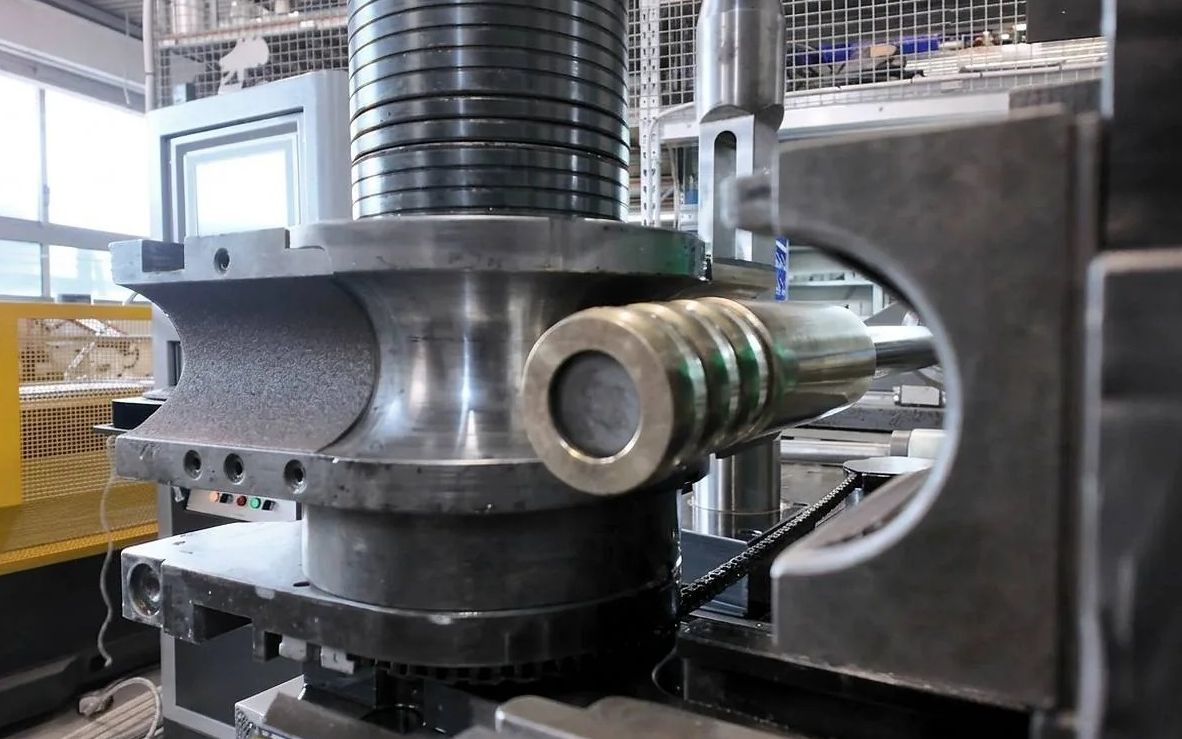
Take a steel tube three millimetres thick and try to bend it. On the curve two things happen at once: the inner wall compresses, the outer one stretches. If nobody steps in, the tube gives way, loses its round section, and the smooth curve you had in mind becomes a dented elbow.
Our solution is a moving core in a special alloy of bronze and aluminium. It goes into the tube, follows the bending machine’s movement from the inside and keeps the section perfectly round while the metal all around it deforms.
But the core alone is not enough, and this is where things get complicated.
Stainless steel is not always identical to itself. Its elasticity changes, imperceptibly, from one heat to the next. Two tubes with exactly the same specification on paper react slightly differently to the bend: one springs back a little more than the other when the machine opens.
Standard software does not see a deviation like that. Someone who has bent tubes for twenty years does.
That is why, at the start of every batch, the bending angle is recalibrated by hand. Bend, measure, correct, bend again. When the piece is right, production starts.
It is the hardest part of the process to explain when people ask why we do not simply buy a better machine.