Materials & Steel
Poolside shower: does chlorine damage steel?
Chlorine does not damage AISI 316. It can damage 304. The difference is an alloy, and for a pool shower it is the only thing that counts.
· 1 min read
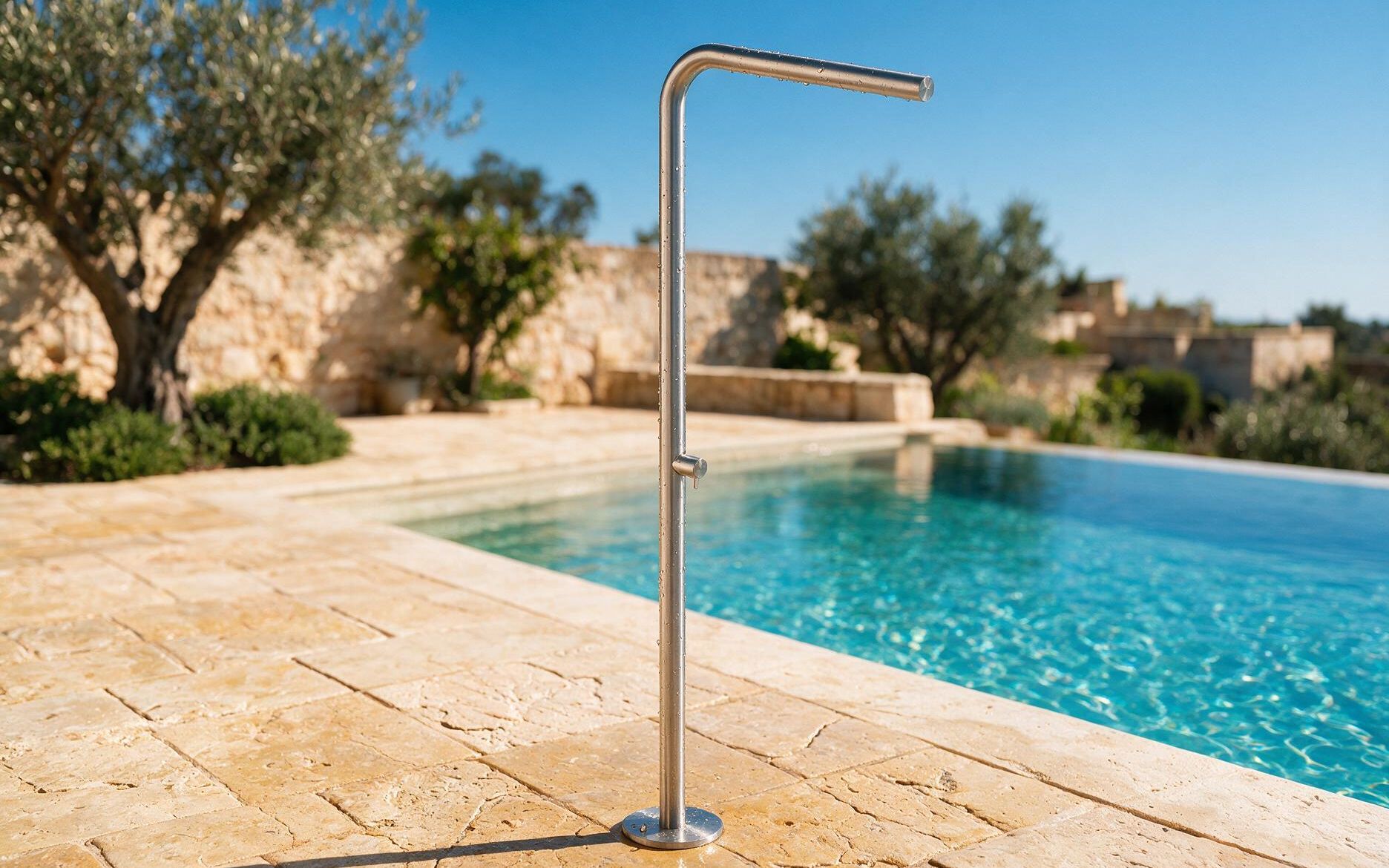
Chlorine does not damage an AISI 316 stainless steel shower, but it can damage an AISI 304 one. The difference lies in resistance to chlorides, which for a poolside shower is the only thing that counts: chlorinated water, splashes drying in the sun, salt if the pool is near the sea.
Chlorine and steel: what happens
The chlorine in pool water leaves chlorides on the surface as the water evaporates. Chlorides are exactly the kind of attack stainless steel is most sensitive to: they do not oxidise the whole surface, they look for one point and dig into it. It is pitting corrosion, the same as sea air.
Why 316 stops it
AISI 316 contains molybdenum; AISI 304 does not. It is a few percentage points, but they are what make the alloy stable against chlorides. That is why 316 is called marine steel, and why a 304 pool shower, after a few seasons, shows the first points where the surface has given way.
The finish counts as much as the alloy
The right alloy with a surface left porous is not enough. Our columns go through polishing with progressively finer grits before any finish, natural, painted or PVD: a sealed surface gives chlorides no point to start from. On painted finishes the paint is an extra layer, and how well it holds depends on how it was cured.
What we recommend to pool operators
A periodic rinse with fresh water, especially where splashes dry in the sun. No acidic or concentrated chlorine-based cleaners on the column. And, when choosing, always ask for the material specification: AISI 316 spelt out, not just “stainless steel”, which means everything and nothing.