Materials & Steel
Yacht showers and taps: why 316 steel and not chrome-plated brass
At sea, chrome gets scratched and the brass underneath gives way. AISI 316 is the same alloy from the outside in: it is the reason Fontealta exists.
· 2 min read
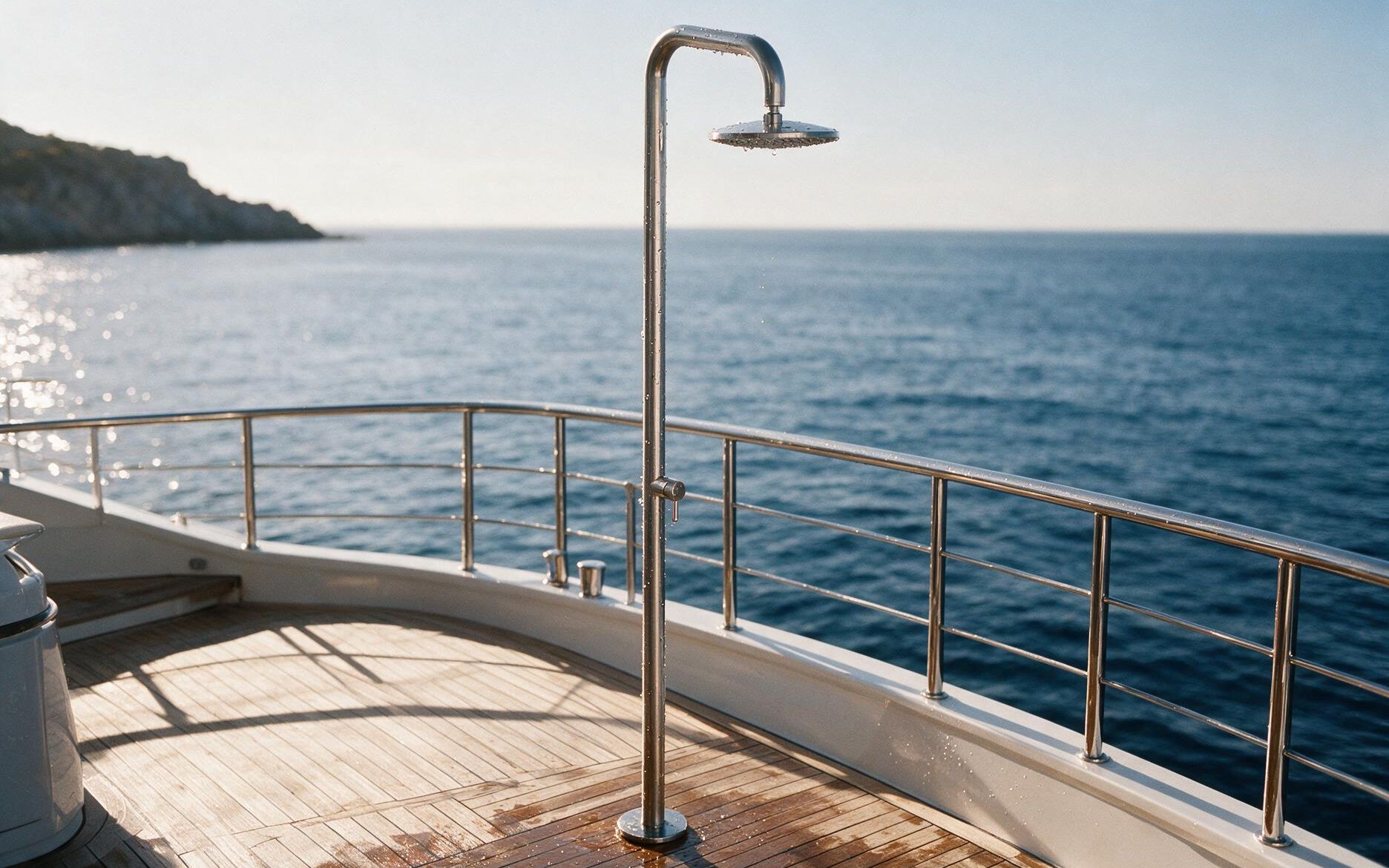
Because on board chrome-plated brass does not hold and AISI 316 stainless steel does. Chrome is a thin layer on a metal that salt attacks; 316 is the same alloy from the outside in. That is how Fontealta was born, in 1999, out of the meeting between taps and Viareggio’s boatbuilding.
The problem with chrome-plated brass
Traditional taps are brass with a surface chrome plating. That is fine in a city bathroom. At sea, where salt finds the smallest scratch in the chrome, the brass underneath starts to corrode and the surface lifts. On a yacht it happens fast, and replacing it costs more than the piece.
Why 316, and why all in 316
AISI 316 is marine steel: molybdenum stops pitting corrosion from chlorides. But the outside being 316 is not enough. In our columns the internal bodies and mechanical parts are 316 too, CNC-machined from solid: where the industry uses brass, here there is the same steel as outside, with fewer joints and fewer points where something can give way.
Nautical standards, on land too
Viareggio is not an address. The shipyards have given us suppliers who work steel to nautical standards: a defect that would go unnoticed elsewhere is flagged here and becomes a reject. Every bar arrives marked at source with heat, batch and date, and for every column we know which heat it comes from. Years later, if needed, we can trace it back.
When the standard piece is not enough
On megayachts the catalogue piece is almost never enough: dimensions, connections, finishes that have to work with the interior on board. When a project asks for something that does not exist, we build it. It is a habit born at sea that today applies to a villa or a hotel on the coast as well.
What to ask your supplier
Three things: the material spelt out, AISI 316; what is inside, not just outside; and where the steel comes from. Ours is exclusively European-made, and the answer to all three questions has been the same since 1999.