Materials & Steel
Stainless steel vs brass faucets: which to choose
Stainless steel, chrome-plated brass or copper: what changes between faucet materials, how they hold up indoors and outdoors, and how to tell them apart.
· 5 min read
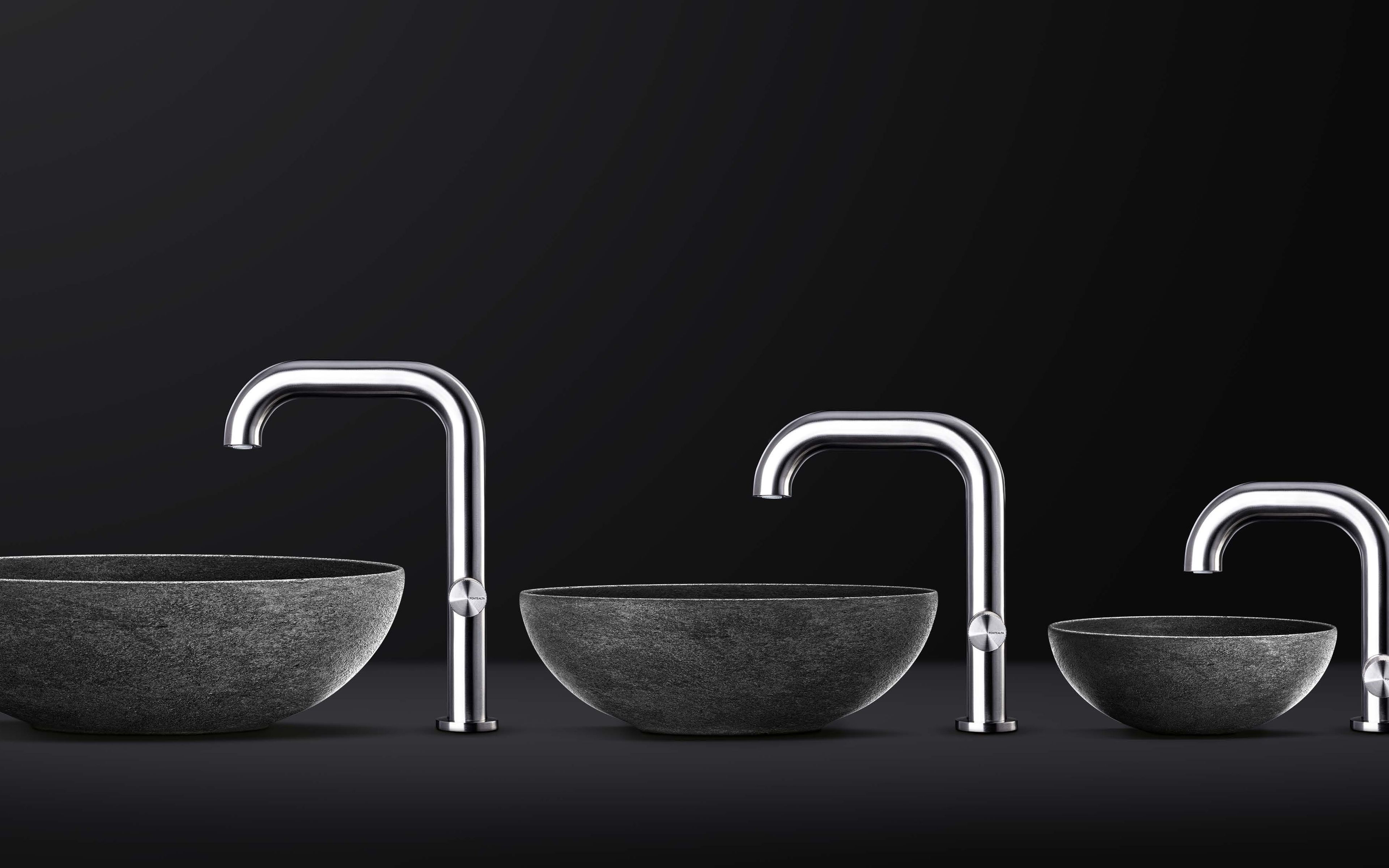
In the stainless steel vs brass faucet debate, Fontealta starts from one point: a brass faucet is almost always coated, usually chrome-plated, so what you see is a thin layer of chrome over the metal. A stainless steel faucet is made of the same material you see and touch, with no coating to wear off. Indoors, both work well; outdoors and near the ocean, AISI 316 stainless steel is the safer choice. Fontealta, founded in Viareggio, Italy, in 1999, uses it for its shower columns and faucets.
What is the difference between a stainless steel and a brass faucet?
Brass is an alloy of copper and zinc. It is the traditional material for faucets: it casts and machines easily, which is why most faucets on the market have a brass body. To protect it and give it color, it is almost always coated: chrome-plated, painted or given another surface treatment.
Stainless steel is an iron alloy with at least 10.5% chromium, which forms an invisible protective film on the surface. AISI 316 adds nickel and molybdenum, which make it more resistant to salt and chlorine. A stainless steel faucet does not need a coating to protect itself: it is polished or brushed, and what you see is the metal itself. It is harder to work than brass, and takes more time in the workshop.
What is a chrome-plated faucet?
Chrome-plated means coated with chromium through electroplating. Chrome is very shiny and gives the mirror look everyone knows. The layer is thin, though: over time, scratches and harsh cleaners can mark it, and then the base metal shows through. Chrome surfaces also show more fingerprints and water spots. So chrome is not the name of a material but of a finish: a “chrome” faucet can be brass or another metal underneath.
Stainless steel, chrome-plated brass and copper compared
The table compares the three materials point by point: what they are, what the surface is, which colors are possible, how they hold up outdoors and how to care for them.
| Feature | AISI 316 stainless steel | Chrome-plated brass | Copper |
|---|---|---|---|
| What it is | An alloy of iron, chromium, nickel and molybdenum | An alloy of copper and zinc, plated with chrome | A pure metal, often paired with brass |
| The surface | The metal itself, polished or brushed | A thin layer of chrome | The metal, which develops a patina over time |
| Possible colors | Natural, PVD (brass, copper, black), painted black or RAL | The color of the coating | Natural copper |
| Outdoors and near the ocean | The safest choice | Depends on the coating: where it is marked, the metal is exposed | Holds up, changing color |
| Care | Water, mild soap, drying | No abrasives or harsh descalers | Let the patina form |
Which should you choose for the bathroom and kitchen?
In an indoor bathroom or kitchen, both materials work well. The difference is in what happens over the years. A stainless steel faucet has the same surface from day one, with no layers that can wear off, and you care for it with water, mild soap and a cloth: the article how to clean stainless steel faucets explains how, finish by finish. A chrome-plated faucet is very bright, but it needs care with cleaners and scratches.
In the kitchen, where the faucet is used and touched all day, the finish matters too. Brushed steel hides fingerprints and water spots better than polished; matte black and PVD finishes add color without changing the material underneath. For a bathroom with a classic feel, some people choose brass or copper for their warm color: in stainless steel, you get a similar look with the brushed brass and brushed copper PVD finishes.
What about outdoors or near the ocean?
Outdoors, things change. Sun, rain, salt and chlorine test every surface, and a thin coating is the first weak point: where it gets marked, salt reaches the metal underneath. That is why, for outdoor showers, pools and the beach, Fontealta uses AISI 316 stainless steel, and in the saltiest settings it recommends the polished MX Supermirror finish. Why 316 rather than 304 is covered in the guide AISI 304 vs 316 stainless steel; the case of boats is in the article yacht showers in 316 stainless steel, not chrome-plated brass.
What are Fontealta faucets made of?
Fontealta’s steel shower columns and faucets are made of AISI 316 stainless steel, worked in Viareggio starting from the raw material. Some components are made of other materials, chosen for their function:
- some hand showers, shower heads and accessories are brass, chrome-plated or polished, like the D03.Q hand shower;
- some handles are resin;
- the Origo Rame collection is copper and brass, and over time it develops a patina that is part of the material.
Every spec sheet states what each piece is made of. All the finishes, from polished to PVD, are on the Fontealta finishes page.
How can you tell if a faucet is stainless steel or brass?
On a chrome-plated or painted piece, you cannot tell by eye: the coating covers the metal. A magnet does not help either: stainless steels like 316 are almost entirely non-magnetic, just like brass, and cold working can make them slightly magnetic. The reliable way is to ask for the spec sheet, with the material spelled out: “AISI 316 stainless steel” for steel, “chrome-plated brass” for brass. If a faucet is described only as “chrome” or “stainless look”, the material underneath is something else.
Mistakes to avoid
- Confusing the finish with the material: “chrome” and “stainless look” do not mean stainless steel.
- Choosing a thin coating for a shower by the ocean or next to a pool.
- Using harsh descalers and abrasive sponges on chrome-plated faucets, which damage the chrome layer.
- Stopping at the word “stainless”: outdoors, which steel matters too, 304 or 316.
- Thinking the warm color of brass only comes in brass: you can have it in stainless steel too, with PVD.
Frequently asked questions
Is stainless steel or brass better for faucets?
Indoors, both work well. Stainless steel has no coating that can wear off and stands up better to salt and chlorine, which is why it is the safer choice outdoors and near the ocean.
Does a chrome-plated faucet wear out?
The chrome layer is thin: scratches, abrasive sponges and harsh cleaners can mark it. With gentle cleaning it lasts a long time.
What does brass PVD mean?
It is a finish: a thin coating, applied to stainless steel, that gives it the color of brass. Underneath, it is still steel.
Is stainless steel magnetic?
Austenitic stainless steels, like 304 and 316, are almost entirely non-magnetic; cold working can make them slightly magnetic. That is why a magnet cannot tell them apart from brass.